Dieting as an FTM lifter
How to not crash - diet yourself into oblivion leading to “fuck - it” mode lol
How to not crash - diet yourself into oblivion leading to “fuck - it” mode lol
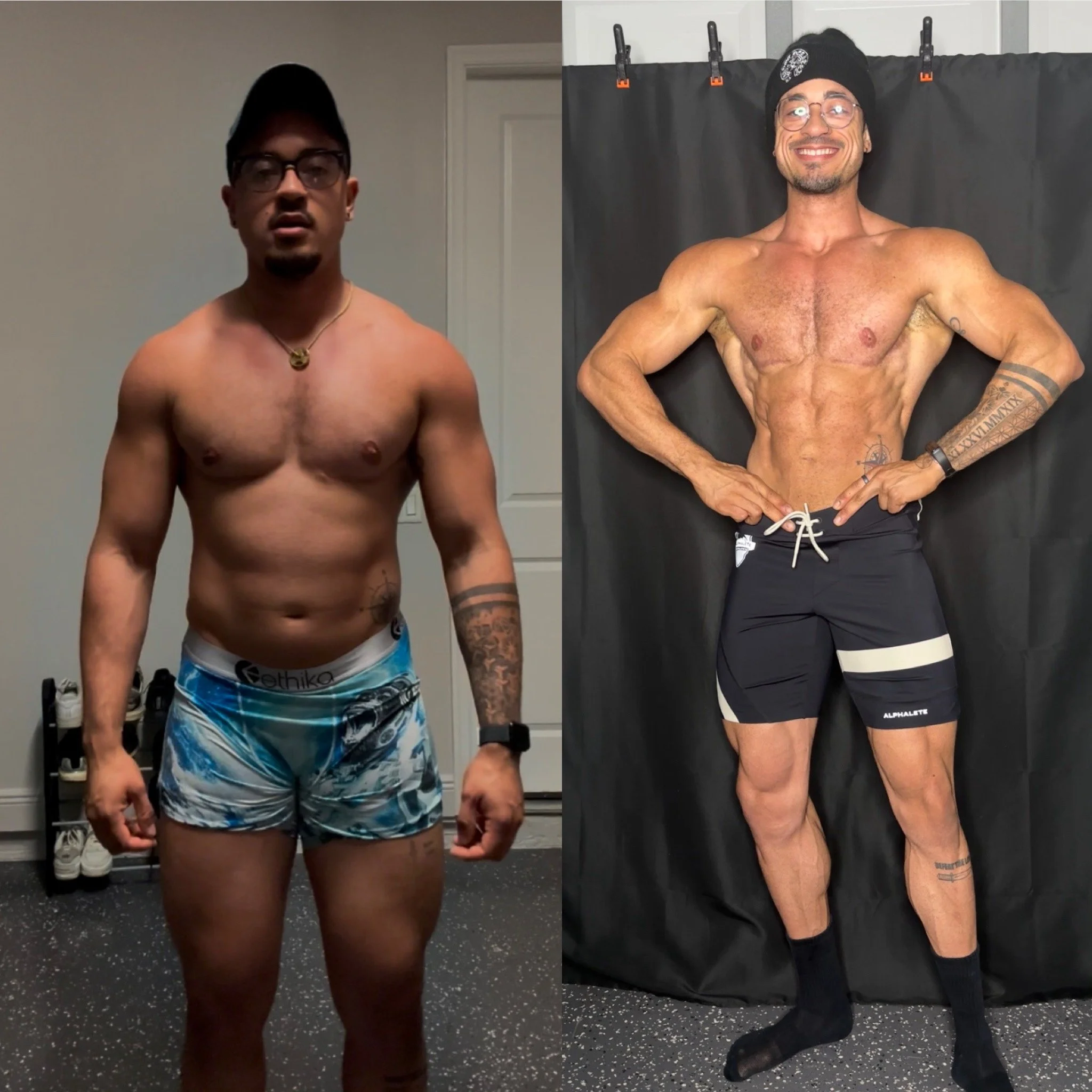
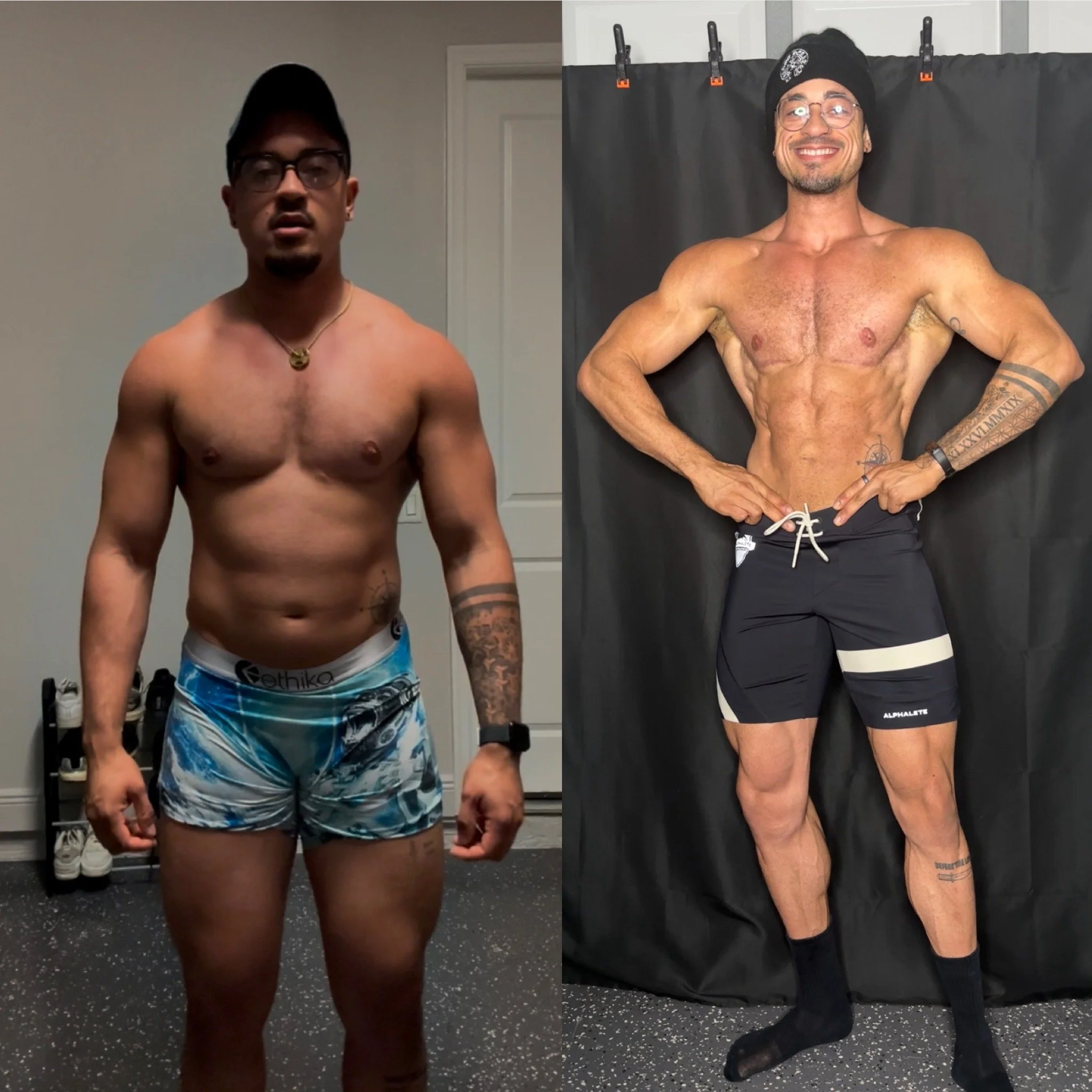
Dieting is something that many FTM lifters find themselves in the midst of, whether it's purely aesthetic and you want to see your abs and get shredded to the gills, or if it’s more health-focused—you want to make sure that your A1C levels are in check and that you avoid any familial history of health issues. We almost all end up here somehow lol.
No matter where your goals lie and what your motivation is, there's a healthy way to go about things to make sure that your success is practically guaranteed. I'll be sharing my personal experiences as well as my professional experiences as a coach specifically for the FTM community. So let's get into it :)
The start point - establishing your baseline
Before devising a plan for your dieting phase, you first need to establish your start point. There are a few key variables when establishing your start point to assess. Don't think in hopes and dreams. Think about what you’re doing right now !
How many steps are you getting each day?
What does your current food intake look like?
How many times a week are you training? Are you generally active or sedentary?
Weigh in fully fasted (first thing in the AM no food or drink) for 2-3 days to find your average !
You can use a food tracking app—I suggest MyNetDiary— take a week and just track your food intake, what you're eating, to get a clear look at what your food intake currently looks like. What is your average protein, carb, and fat intake? What is your average calorie intake? This gives you a clear baseline for your food intake.
Now steps wise, you can grab a pedometer from any online shop and just track a week of steps to see where you fall. This gives you your baseline.
Now, are you doing any cardio? If not, that's something to play with later on in the diet. Do not try to throw a million things at your system at once. Start small and ramp your way up.
The Science Behind the Baseline…
When establishing this start point, you are mapping out your Total Daily Energy Expenditure (TDEE). TDEE is made up of your Basal Metabolic Rate (BMR), the Thermic Effect of Food (TEF), Exercise Activity Thermogenesis (EAT), and Non-Exercise Activity Thermogenesis (NEAT)—which is made up by those daily steps.
Research consistently shows that tracking your baseline before making quick and honestlyemotional changes is critical for long-term fat loss Ws.
How cycles can impact your dieting phase 🩸
(Sorry if this is triggering but it needs to be discussed homie)
Now let’s talk about a major variable normie dieting advice doesn’t take into account… whether you’re on HRT or not, many of us still experience a "phantom cycle."
Personally, my weight spikes by about 2 lbs every month. I hold onto water, feel sluggish, etc I also have clients on lower testosterone doses who still experience actual bleeding, while others have no cycle symptoms at all.
You MUST account for this. If the scale spikes because of cycle symptoms, it does not mean you gained fat, and it does not mean you should reduce your food intake!!
Listen to your body instead of blindly starving it. These are critical differences we have to navigate, and they make our fitness journeys different than cis dudes. Ignoring these variables that make us different doesn’t make them go away and makes your life harder in the end. With love lol.
Devising your plan of action!
Now that you have your baseline for steps, food, and weight, it’s time to make changes (FUN ! lol)
If your weight maintains on 2,000 calories and 5,000 steps, decide whether to increase your steps or decrease your food. Do NOT do both at once, or you’ll use up your resources too soon and burn out.
I suggest a small cut of around 300 calories just to get the deficit going. Don't do too much too soon. Really prioritize protein and carbs - if you’re on testosterone and have that exogenous support + are strength training I like to go with :
15% fat
30% protein
55% carbs
Carbs are going to do a TON of heavy lifting here, and you want to protect your energy + recovery. Protein is important however muscle protein synthesis is not an infinite process so you don’t need more than about 0.75-1g per lb of LEAN body mass.
If you are AFAB and not on testosterone we want your fat intake a bit higher to support hormone production -
25% fat
30% protein
45% carbs
From here, weigh in at least once a week on the same day, fully fasted. If your weight doesn't budge for two weeks, pivot. Decide whether to increase your step count, reduce food further, or introduce cardio. If you love food (same tbh)bumping your steps to 8,000 or adding 10 to 15 minutes of low-intensity cardio (aiming for a 140 BPM heart rate) is a great option to get things moving without doing tooooo much!
How much weight should you be losing?
Now, the rate of loss you're shooting for is highly person-dependent. I have clients who can lose 2 lbs a week and be perfectly fine—still have amazing training sessions, no cognitive decline, and no crazy appetite spikes.
But for the average lifter, losing about 0.5 to 1 lb a week is ideal. It might need to be even slower if you have a naturally high appetite- you can only white knuckle those cheesecake cravings for so long lol. Slow and steady wins the race, unless you have a specific deadline like a photo shoot (feel free to email me for coaching if so lol)
You want to play the long game here. Your hormones, your appetite, and preserving your hard-earned muscle mass are nothing to play around with.
The Science of Rate of Loss & Muscle Retention…
Aiming for a conservative rate of loss—typically 0.5% to 1% of your total body weight per week—is pretty supported by sports nutrition data for preserving fat-free mass.
A study published in the International Journal of Sports Physiology and Performance compared an aggressive rate of weight loss (1.4% body weight loss per week) to a slow rate (0.7% per week) in athletes. The researchers found that the slow weight loss group not only preserved their lean muscle mass but actually managed to increase it slightly while dropping fat (person dependent of course!)
For my fellow FTM lifters, protecting muscle during a deficit is EVERYTHING. An overly aggressive calorie deficit causes a sharp decline in muscle protein synthesis. Research from The American Journal of Clinical Nutrition shows that when energy deficits are too much, the body increasingly relies on breaking down skeletal muscle for fuel, even in resistance-trained and experienced lifters…
TLDR..
Establish a REAL Baseline: Before changing anything, spend a week tracking your actual food intake (using an app like MyNetDiary) and tracking your daily steps to find your true starting point. Don't guess!
Pull Only One Lever at a Time: If your weight is stable, either slightly decrease your food (around 200 calories) or increase your daily steps/low-intensity cardio. Never do both at once, or you'll run out of adjustments too early
Aim for a Steady Rate of Loss: Slow and steady wins the race. Aim to drop about 0.5 to 1 lb a week to protect your hard-earned muscle mass, energy levels, and brain function
Protect Your muscle with Protein & Carbs: Keep protein moderate (around 0.75 to 1 gram per pound of LEAN body weight) from lean sources to rebuild muscle, and don't slash your carbs into the depths of hell. Carbs keep your muscles full with glycogen, and prevent you from feeling zombie mode while training
Track and Respect "Phantom Cycles": Whether you are on HRT or not, hormonal shifts can cause temporary water retention, fatigue, and sudden scale jumps (often 2+ lbs). If the scale jumps during this time, do not crash your food—it's fluid, not fat and don’t mentally crash out either.
Good luck with the dieting and remember you are worth more than having or not having visible abs…
If you’re interested in free guides that includes low cal snacks check it out !
If this all sounds like a lot feel free to work with me on a custom meal & training plan
Should you want thorough Coaching I am taking on 1:1 clients :) Apply here!
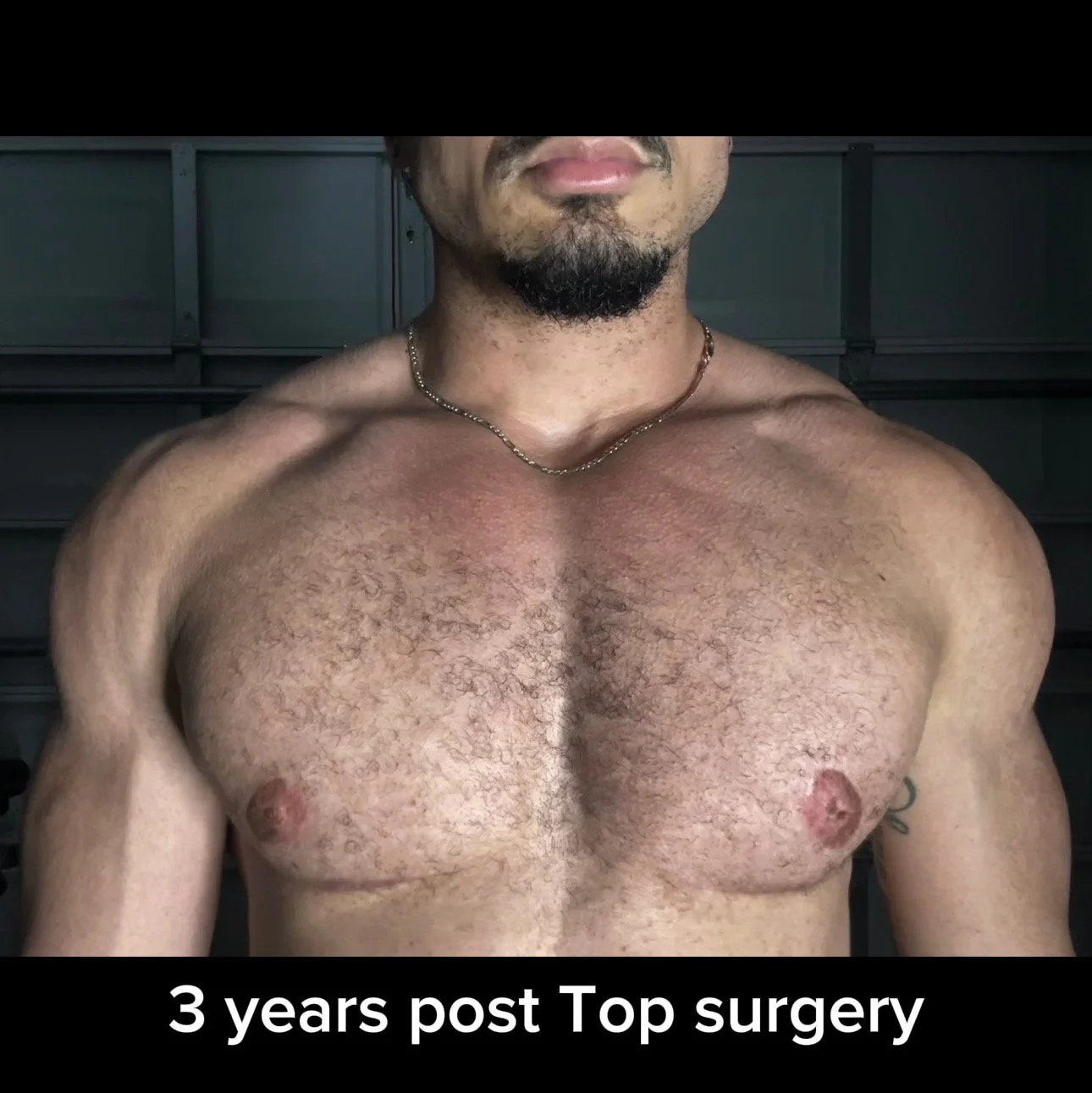
How I used Bodybuilding to Prep for Top surgery
A breakdown of How I approached my Top surgery date similarly to a bodybuilding prep to optimize my results
No, this isn’t advice. Just exactly what I did and why I did it :)
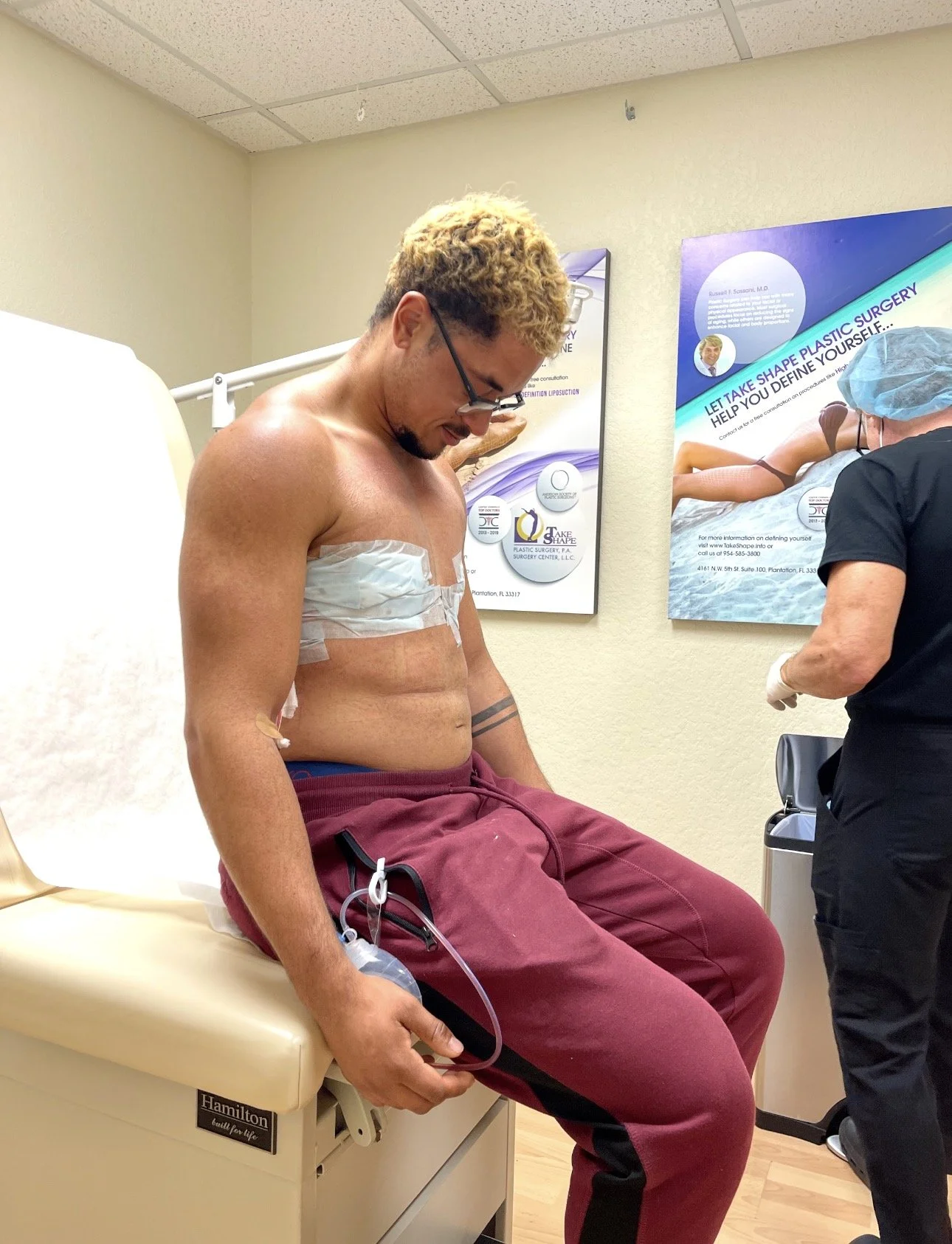
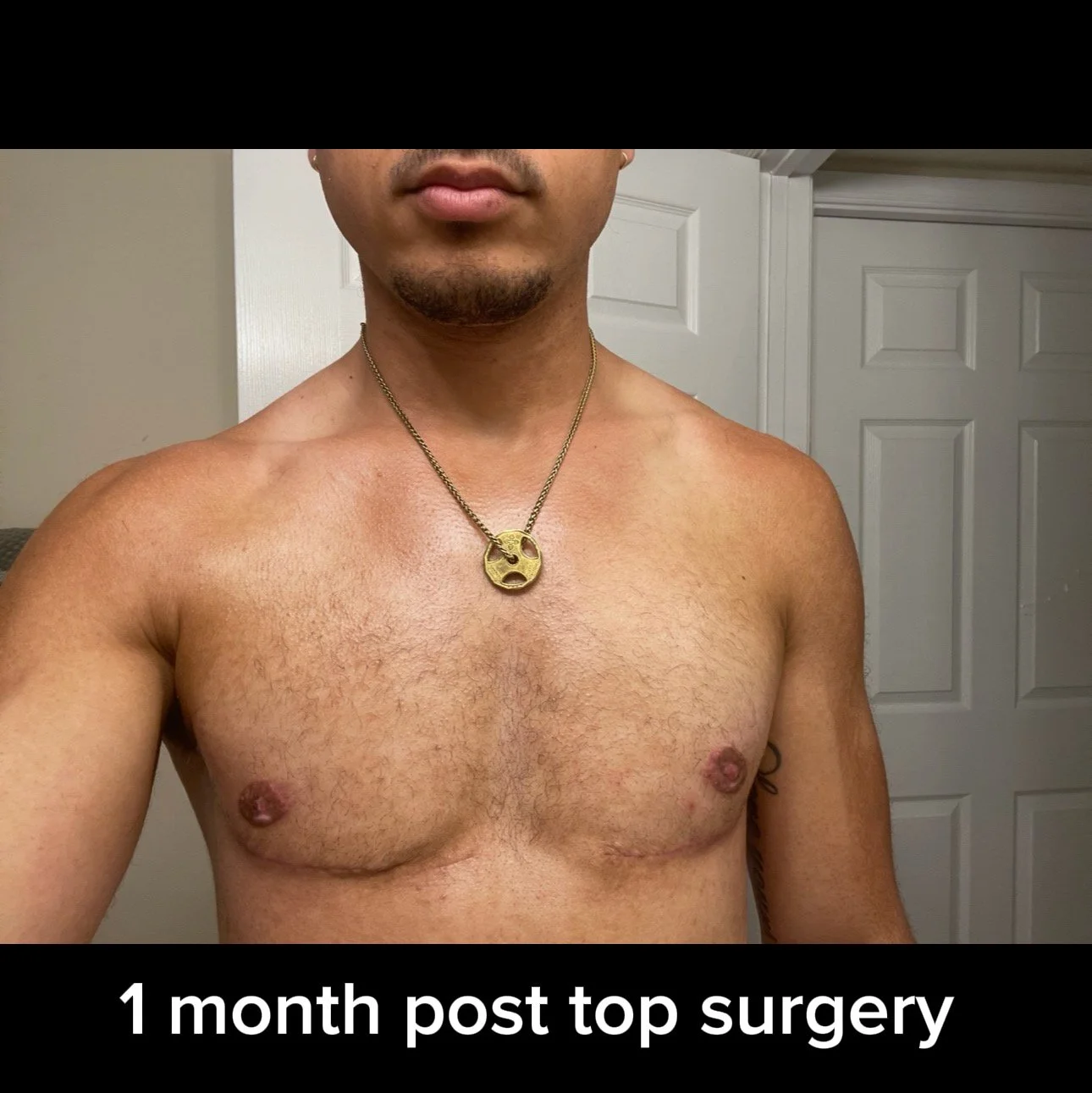
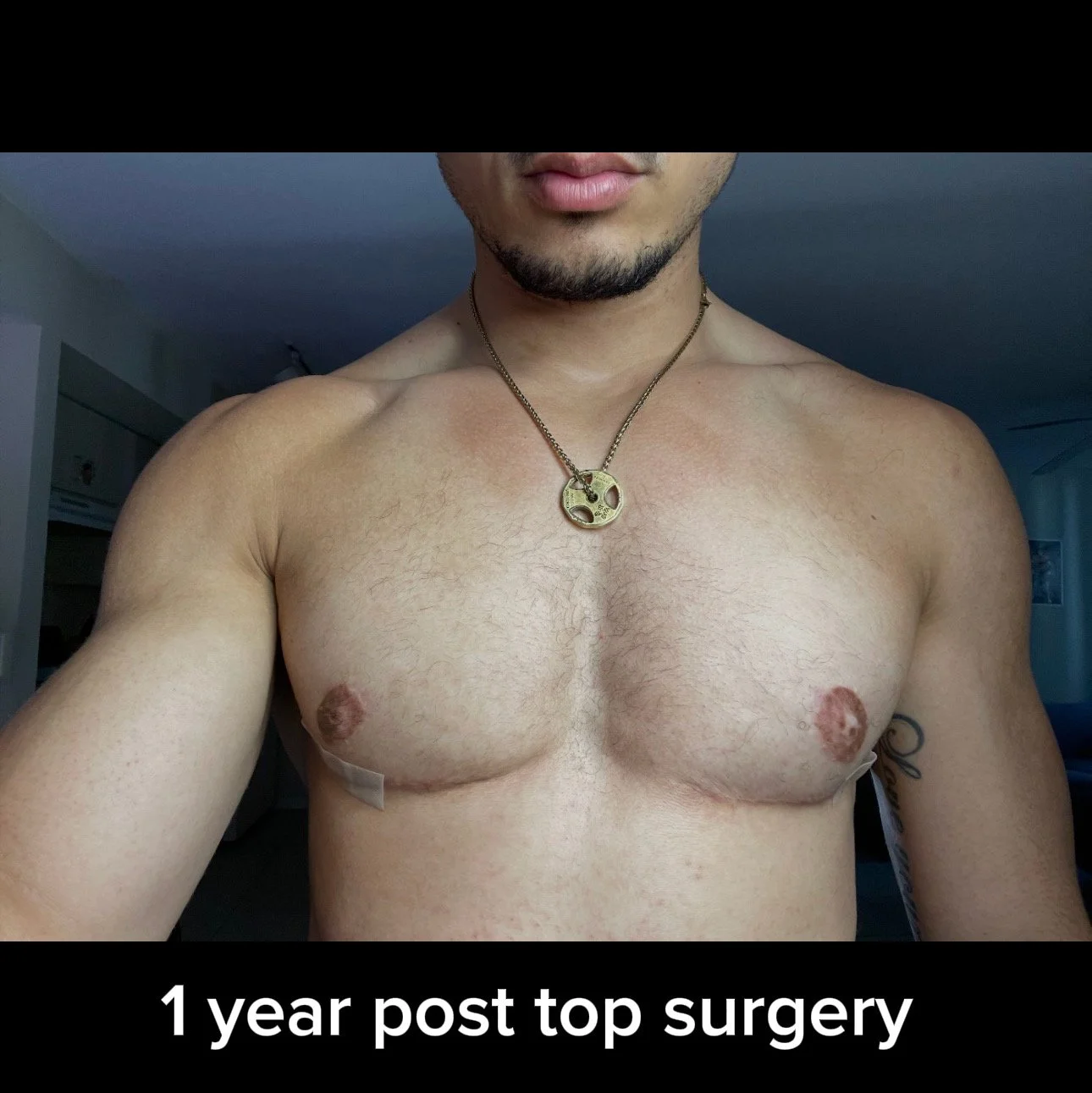
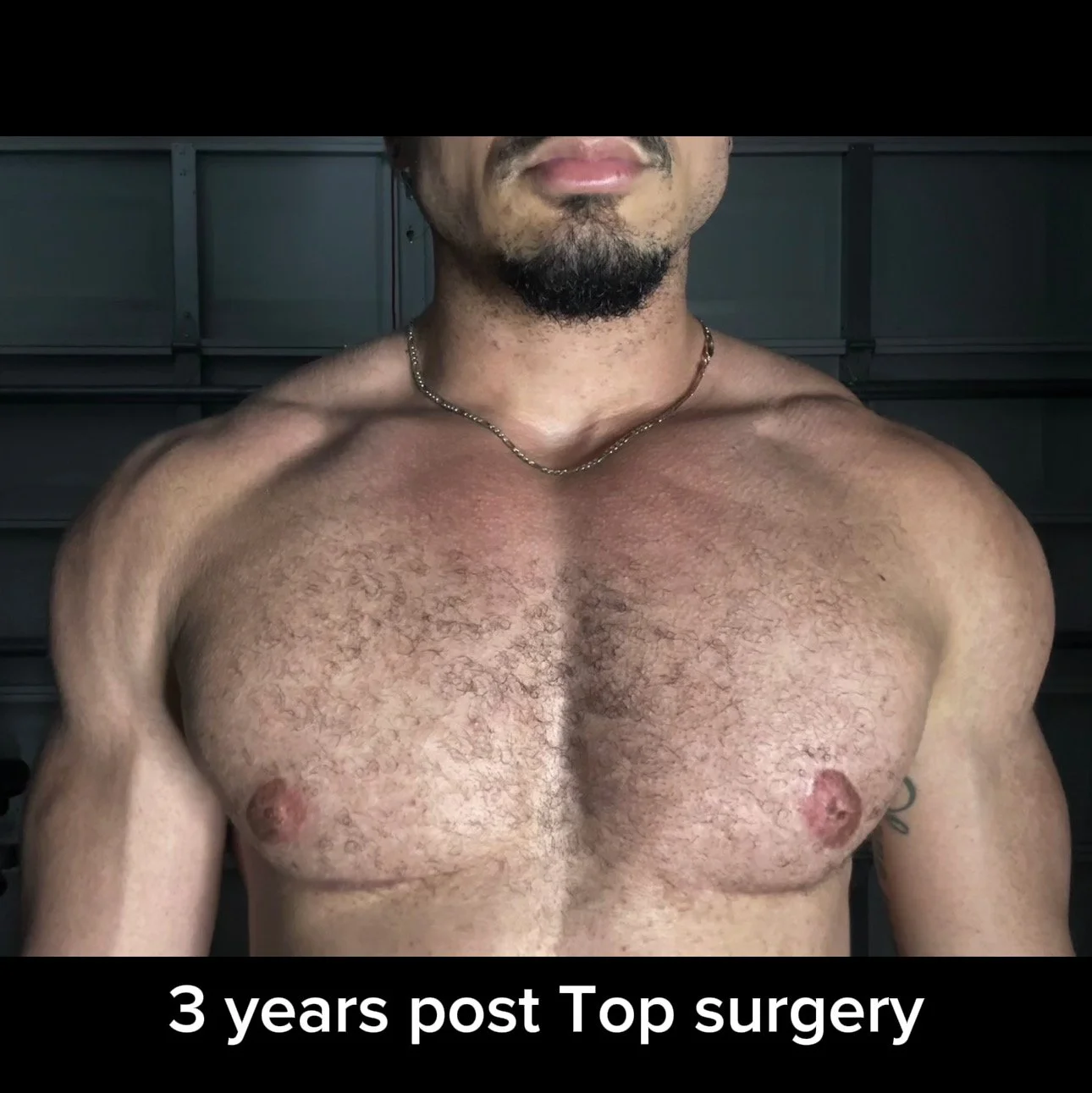
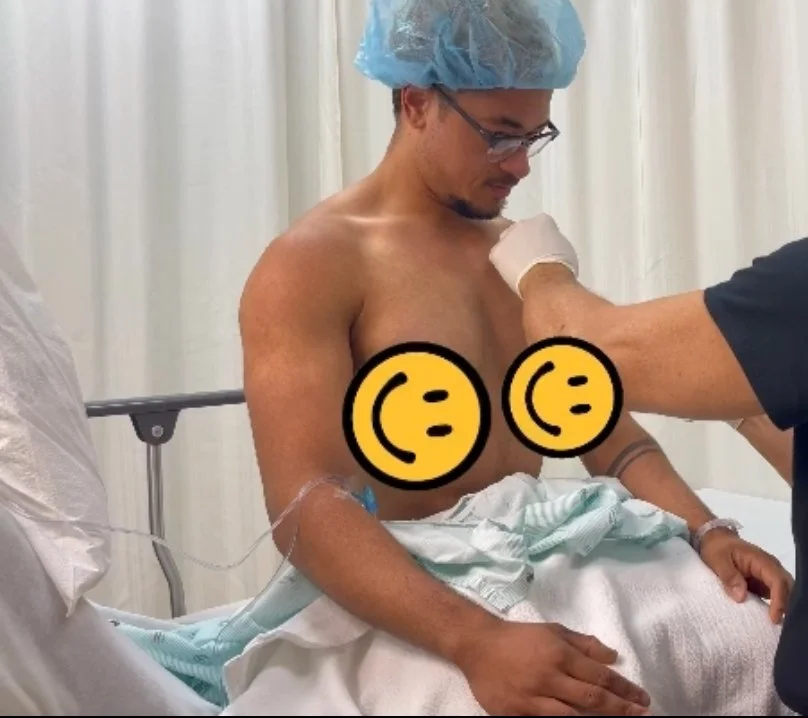
Hey there, I’m Devon (he/him) and I’ve been working out since 2020. I really locked into taking training seriously in 2022 and got Top surgery in 2023.
Here’s a full breakdown of what the time leading up to my Top surgery looked like !
2022: Ripping the Band-Aid Off
It was 2022 and I finally decided that I'm going to bite the bullet and get top surgery. To be honest, I looked up to people like Ajay Holbrook. At the time he had not had surgery, just a really small chest, and had a really masculine looking chest without top surgery. I thought, I don't want to have to go under the knife. All I want to do is train my ass off so that I don't need surgery in the first place.
BUT, after around 2 years of trying—doing as many push-ups as humanly possible, bench pressing two plates for reps, pretty much killing myself to have a masc. looking chest—I could simply not out-train my genetics and the breast tissue that I had. So I decided that I wanted to get top surgery within the next year.
I devised a plan. I pretty much reverse-engineered a bulking and cutting phase so that I could build up as much muscle as humanly possible and then diet off the fat that was accumulated in that muscle building phase right on time for top surgery.
The 4-Month Bulking phase
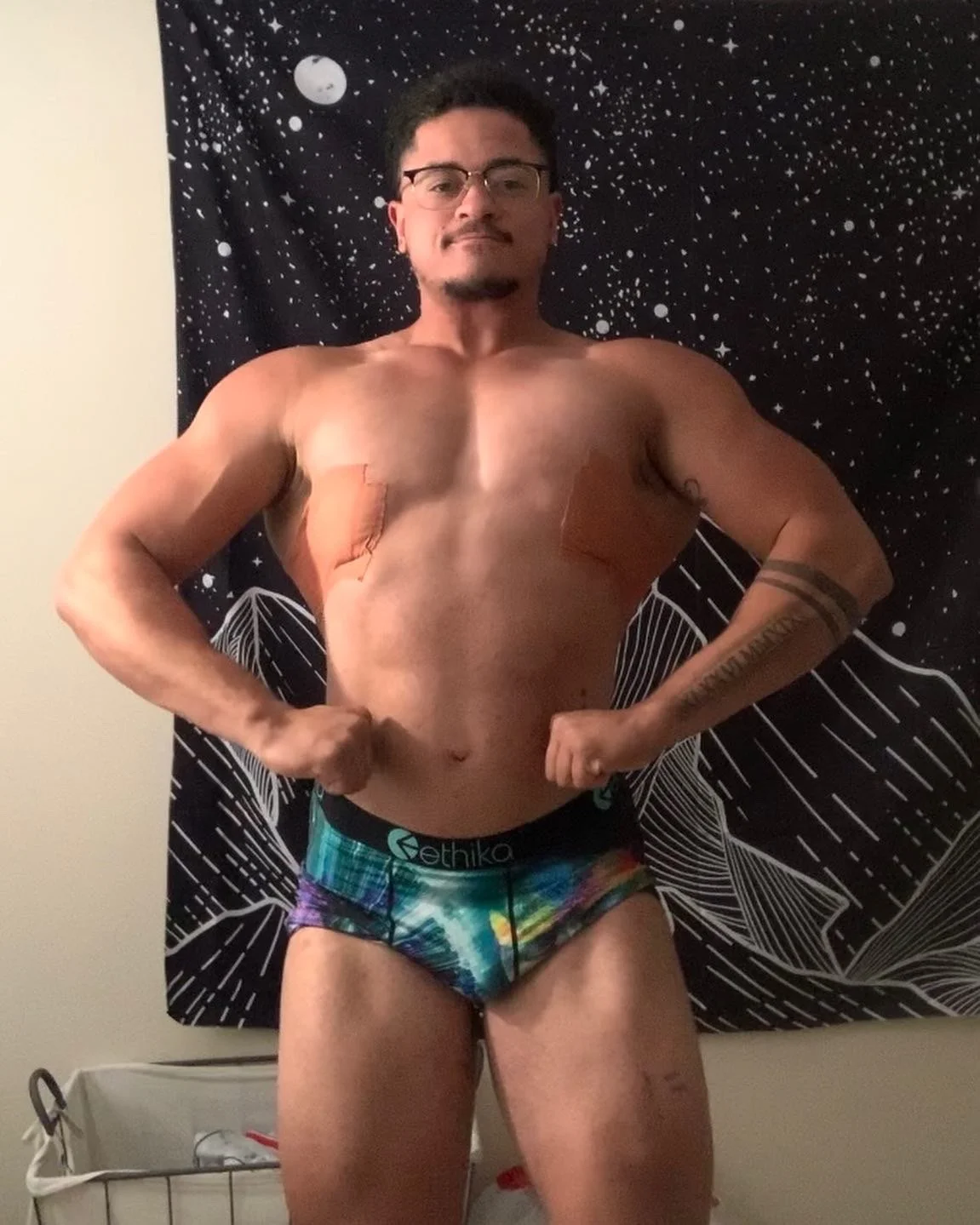
Devon - peak bulk and feeling juicy
The plan was to bulk up for around 4 months, eat more food than I had ever eaten in my entire life, train harder than I had ever trained in my entire life, and then give myself around 3 months to diet leading up into top surgery.
And I do have to be perfectly honest here. Because I was desperate to grow as much muscle as possible and train away as much breast tissue as possible, I did take PEDs for this bulking phase (12 week low dose of a compound, not disclosing to not influence anyone)
During this bulking phase, my calories got pretty high. I actually hit 3,000 calories for the first time in my life. I was eating ground beef and white rice like I was getting paid to do it. Ultimately, I'll be real here as well, my blood pressure did suffer because I was having a ton of sodium and just not being smart with water intake and cardio + general movement.
I got pretty freaking massive (high 190s) My chest got pretty dense and I decided, you know what, this is good. I gained around 15 lbs over the course of those four months. That was really aggressive, and that rate of gain I honestly do not recommend. Anywhere from 0.5-0.75 / week or 1lb / 2 weeks is a safer rate of growth.
Rushing the Cut (The Mistake I learned from)
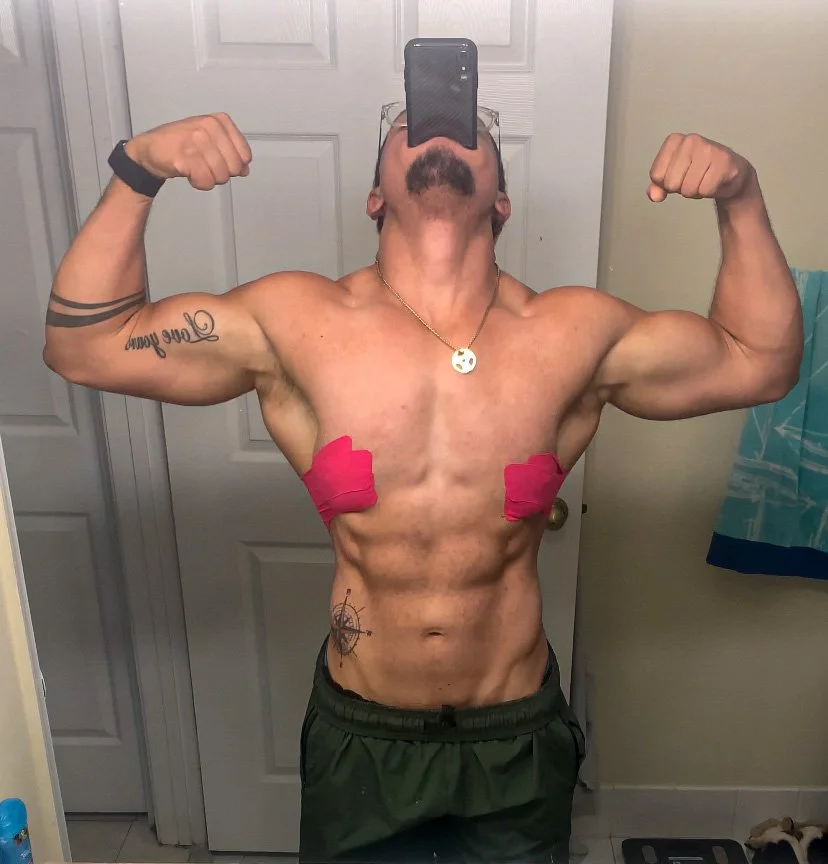
Devon flexing the highly coveted Abs
I locked in on what surgeon I wanted: Dr. Sasani in Plantation, Florida. I wanted to make sure that I dieted my ass off before I went in for the consultation so that he would pretty much have a crystal-clear image of what he was working with, without extra subcutaneous fat from the bulk clouding his perception of things.
So I (stupidly) did not have a holding phase. At THIS current point in my lifting career and for my clients, I always introduce a holding phase as a stepping stone between a bulk and a cut. The reason for that is you work your ass off to build strength, to hit new PRs, and to solidify muscle. If you go straight from a bulk into a cut, you lose both strength and muscle. In the bodybuilding world we call this “marinating”.
Instead of having a holding phase, I went straight from bulking into dieting and I really crashed. I dieted myself into the ground. I lost a pound or even more than a pound each week, and I also lost muscle with… However, I got pretty shredded, and this was the first time that people started to recognize that I was really lean. Got a few thousand on IG as a byproduct of flexing my abs so that was cool haha.
From diet to Surgery (and the binge eating in between)
Now what I SHOULD have done, was give myself about a 2-3 week grace period where I was no longer in a caloric deficit leading into top surgery. Because I was STARVING every damn day for the final 6-8ish weeks of the diet, things didn’t go so well. I went on a road trip upstate to see Paramore with my GF at the time, and on this road trip I ate like an ass. I binge ate terribly around 9k cals in one day - and this was actually 1 week before my date.
With giving myself a diet break leading into surgery I would have done my CNS and appetite a break - and been in a wayyy better position leading into surgery. And this step is CRUCIAL for my clients now. Thank goodness.
Now back to what ACTUALLY happened - the binge eating. I felt like a terrible person for eating this amount of food on my road trip. This bloat combined with the post op bloating and inability to have a bowel movement due to pain meds + poor motility from antibiotics was just a mess.
By no means was this an easy road, I truly did test myself and my limits with bulking - with dieting hard as hell- with it all. BUT, I learned so much. So much about food selection truly mattering, how to aid gut health both leading into and post top surgery and the accompanying meds. And so much about why it’s important to not push yourself to your limits going into one of the most important ad physically demanding surgeries that many of us in the FTM community are privileged enough to undergo.
Whether you're just starting your fitness journey or looking to take your physique to the next level, I've created resources to help you every step of the way.
-Feel free to check out my Free guides which includes a top surgery survival guide !
-If you’d like a custom meal or training plan we can make that happen!
-Or should you want toward together on the 1:1 level you can check out your options here Coaching!
Thanks for your support homie :)